Wire rope hoists


Wire rope hoists


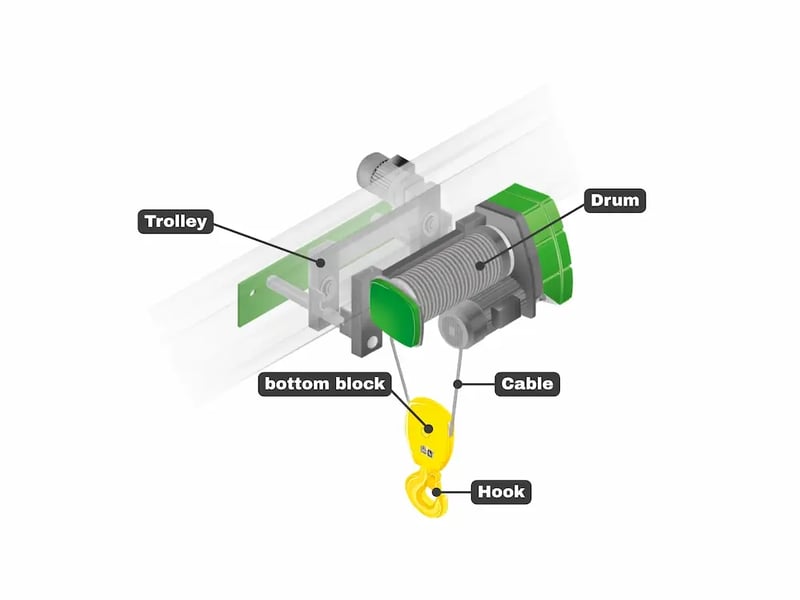
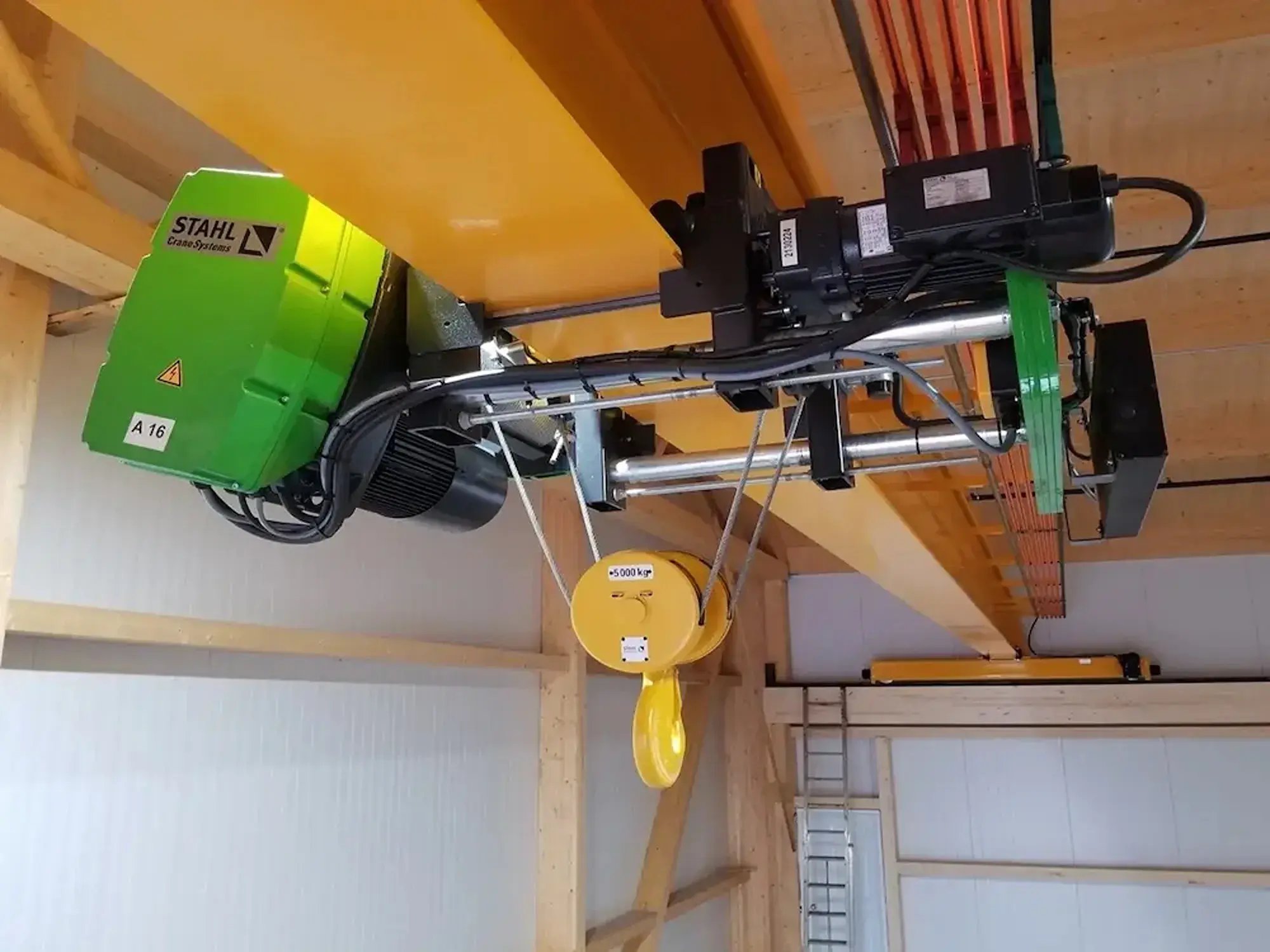
A wire rope hoist is a lifting device designed for applications that require more capacity, greater lifting height, or more frequent use than a chain hoist. Also called an electric wire rope hoist, it lifts the load using a steel wire rope wound onto a drum and is most often installed on an overhead crane or monorail.
 
This page presents the wire rope hoists available at Premium, the criteria that guide the selection process, and useful reference points for comparing the three available brands : STAHL, GH et Tundra.
 
For a specific project, assessing your application remains the safest way to choose the right configuration.


 In short :
  • A wire rope hoist is suitable for heavy loads, greater lifting heights, and sustained operation.
  • The right choice depends on the application: capacity, duty class, speed, environment, space constraints, and configuration.
  • Premium offers three brands  — STAHL, GH, and Tundra — each with its own strengths depending on the need, technical requirements, and budget.
  • For a reliable recommendation, have your application assessed by an expert.


Speak with an expert to have your application assessed. To prepare effectively, we recommend reading the article Need an overhead crane: where to start?. If possible, prepare the following information: required capacity, lifting height, frequency of use, environment, and desired configuration.


When should you use a wire rope hoist?

A wire rope hoist is designed for more demanding lifting applications : heavy loads, higher lifts, and frequent use.
 
  • Capacity : Wire rope hoists can handle heavy loads, often over 3 tons.

  • Lifting height : The drum allows for higher lifts, generally 30 ft or more.
  • Frequency of use : Better suited to repeated use with heavy loads.
Cable hoist anatomy
 

How do you choose a wire rope hoist ?

The choice rarely depends on capacity alone: frequency of use, speed, environment, space constraints, and configuration are just as important. Until these factors are clearly defined, it is difficult to confirm a precise recommendation.
 
Before choosing a wire rope hoist, gather this information. It will help the expert better understand  your application and recommend a suitable configuration.


Criterion What to clarify
Capacity  What is the maximum load to be lifted, including accessories such as slings, spreader beams, or other below-the-hook devices?
Lifting height  How far does the load need to travel between the lowest point and the highest point?
Frequency of use  How many lifts are expected per day or per hour? Are the loads often close to the maximum capacity?
Speed and precision  Does the lifting need to be fast, highly precise, or both? Is variable speed (VFD) required to position the load smoothly? Is premature brake wear an issue with your current equipment?
Environment  Will the hoist be used indoors, outdoors, or in a hazardous location, such as an explosion-proof area?
Space constraints  What is the available height? Are there any obstacles? How close does the equipment need to get to walls, the ceiling, or other obstacles? 
Configuration  Will the hoist be fixed, or installed on another piece of lifting equipment, such as an overhead crane or monorail? Is this for a replacement or a new installation?


Capacity

Capacity is the starting point.  Indicate the actual maximum load, taking into account the weight of lifting accessories such as the spreader beam, slings, and other below-the-hook devices.


Speed

Lifting and travel speeds influence productivity and ease of use.  Variable speed (VFD) makes precise positioning easier and reduces component wear. 


Environment

The operating environment can rule out certain options from the start.  Extreme cold, weather exposure, humidity, dust, or hazardous locations requiring explosion-proof equipment impose specific requirements, such as protection ratings, certifications, and suitable materials.


Space constraints and installation requirements

The available space — clear height, clearances, and supporting structure — determines the possible configuration. Limited clear height may point to a low-headroom trolley or another arrangement.


Application requirements: duty class and precision

After capacity, duty class is often the most determining criterion. It represents the equipment's work intensity based on how it's used: lift frequency, typical loads, and number of cycles.
Equipment that is properly sized for its duty class lasts longer. Conversely, an underestimated duty class leads to premature wear, frequent breakdowns, and production downtime .


Brands and product lines available at Premium 

Premium offers STAHL, GH, and Tundra wire rope hoists; each brand has its own strengths. To compare them effectively, five reference points are useful: available product ranges and configurations, inventory and parts availability, technologies and features, specialized options (explosion-proof, open winch, etc.), and price positioning. A technical validation is still required before confirming a configuration.


Brand Key takeaway
STAHL  Recognized brand, broad product range, significant Canadian inventory, and specialized options
GH  Advanced technologies, monitoring, high capacities, and options suited to more technical applications
Tundra  Canadian brand, standard variable speed (VFD), local support, and competitive positioning


Which hoist is the cheapest?
The question is legitimate, but the purchase price is only part of the answer. Several factors influence cost: capacity, lifting height, drive type (VFD or 2-speed), required certifications, environmental protection, and configuration.
 
As a general indication, a wire rope hoist can cost several tens of thousands of dollars, depending on the capacity, lifting height, trolley, speeds, options, and operating environment. This gives only a general price range: the actual price must be validated based on the application.

Over the equipment’s service life, a unit that is less expensive to purchase can cost more to operate, maintain, or replace if it's not properly sized for your actual use.


Element STAHL GH Tundra
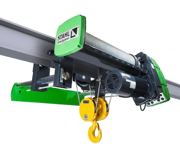
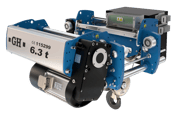
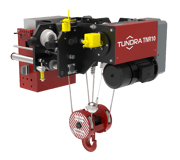
  Stahl palan SH Palan GH Palan Tundra TNR 10-1
Positioning STAHL designs and manufactures its wire rope hoists in Germany. It is the most recognized of the three brands, with the broadest product range and the largest Canadian inventory. GH designs and manufactures its wire rope hoists in Spain, with positioning focused on advanced technologies, operation monitoring, and features that are unique on the market. Tundra is a Canadian brand, designed and manufactured in partnership with Craftsman Automation, with inventory, assembly, and technical support in Canada.
Country of origin Germany (STAHL CraneSystems) Spain (GH Cranes) • Canada (Tundra MH; development and design)
• India (Craftsman Automation; manufacturing)

Inventory

(hoists and parts)

Terrebonne, Canada Ste-Pie, Canada
(near St-Hyacinthe)
Terrebonne, Canada
Series/ product ranges SH series; AS series New generation series; Twin hoist series TWL series; TWR series
Lifting capacity 500 to 160 000 kg
SH series: 500 to 25 000 kg
AS series : up to 160 000 kg
1 000 to 200 000 kg
New gen. : 1 000 to 100 000 kg
Twin hoist : up to 200 000 kg
3 000 to 50 000 kg
Lifting speed

Two-speed as standard;

variable speed (VFD) optional

Two-speed or variable speed (VFD) available; Small price difference between the two Variable speed as standard (VFD)
Trolley travel speed

Two-speed as standard

variable speed (VFD) optional

Variable speed (VFD) as standard Variable speed (VFD) as standard
Configuration Stationary or on trolleys (under-running or top-running) Stationary or on trolleys (under-running or top-running) Under-running or top-running trolleys
Distinctive elements • Recognized brand
• Broader product range
• Largest Canadian inventory through CanStahl; potentially shorter lead times and better parts availability
• Strong expertise in CSA-certified explosion-proof hoists


Reference : Why partner with STAHL CraneSystems? — Premium "About us" page.

• Competitively priced VFD

 • Competitive positioning for capacities ≥ 20 metric tons 

• Advanced technologies : tandem management, load display on remote control, real-time monitoring (load, hours, number of manoeuvres, overload, alerts)

• Only brand to offer open-winch (open-winch hoist, intensive use, high capacities up to 400 metric tons)

• Standard VFD at a competitive price
• Technical support in Canada
• Competitive positioning
Documentation Brochure : AS series
Brochure : SH series
Brochure : New Generation series
Brochure : Twin Hoist series
Brochure : TWL, TWR series


Palan tundra 1
Palan gh 1
Palan stahl 1
Palan tundra 2
Palan gh 4
Palan stahl 2
Palan tundra 3
Palan stahl 4
Palan stahl 3

Choosing based on  your actual needs

Application requirements often point more naturally to one brand than another, without guaranteeing a final choice.  Here are a few reference points based on the type of need. In every case, an application assessment is needed to validate the choice. 
 
  • Fine movements and precise positioning:  variable speed (VFD) is essential. Check whether it's standard or optional with the brand being considered, and what the price difference is. 
  • Recognized brand, broad product range, and readily available parts :  reputation and local inventory matter just as much as the technical specifications. 
  • Competitively priced variable speed (VFD) :  compare equivalent technologies (VFD to VFD, 2-speed to 2-speed). The conclusions may change depending on the basis of comparison.
  • Very high capacities or special configurations : some options  — custom open winch, explosion-proof, heavy-duty use, high capacity, monitoring application — are only available from certain manufacturers. First validate whether your operations require them. 


Common mistakes

  • Choosing based on capacity alone. Frequency of use, speed, environment, and configuration often change the recommendation. 

  • Making a decision without discussing the application. Without the lifting height, duty class, environment, and configuration, the choice remains incomplete. 
  • Rejecting a brand simply because it's less familiar. The right reflex is to ask for proof of reliability, such as certifications, support, parts availability, and lead times. Premium can document these elements when they are available.


Next step

Before confirming a configuration, have your application validated : capacity, lifting height, duty class, environment, and configuration. This will help you get the most suitable configuration, without surprises during installation. To prepare your request, also read the article Need an overhead crane: the information to provide to your supplier


Talk to an expert or request an assessment of your application. Lead times and options vary depending on the context; a short discussion helps clarify your needs. 


FAQ

Wire rope hoist or chain hoist?

A wire rope hoist is suitable for heavy loads, great lifting heights, and frequent use. A chain hoist remains suitable for more modest capacities. 

To go further: Wire rope hoists vs chain hoists: how to make the right choice


What is the service life of a wire rope hoist and what maintenance is required ?

Service life is usually between 10 and 20 years, or even longer. It varies depending on duty class and maintenance. Equipment that is properly sized and maintained according to the manufacturer’s recommendations lasts longer; regular maintenance — including inspection of the wire rope, brakes, and components — remains essential. 


What information should be prepared before requesting a quote ?

At minimum: capacity, lifting height, duty class, environment, and desired configuration.


What influences the cost of a wire rope hoist ?

Capacity, lifting height, speeds, drive type, environment — including protections and certifications — and configuration. An application assessment helps frame these factors. 


Can a wire rope hoist be used outdoors or in extreme cold?

It depends on the model and its protections. Some configurations are not suitable for Québec’s extreme cold; the operating temperatures and application must be validated with the hoist manufacturer. 


Electric or manual wire rope hoist: which one to choose ?

An electric hoist is suitable for frequent, heavy, or high lifts, where motorization saves time and reduces effort. A manual hoist remains relevant for occasional use and lower capacities.


What is the difference between a wire rope hoist and an overhead crane?

The hoist is the device that lifts the load; the overhead crane  is the structure — beams and runways — on which the hoist travels. A wire rope hoist is often installed on an overhead crane or monorail. 


Learning Center

Whether you're an expert or know nothing about cranes, you'll find everything you need to know HERE.
01

Their ability to listen to our specific needs has been a major strength. They have always responded quickly and efficiently, especially in emergency situations, which has greatly contributed to the continuity and success of our operations. I highly recommend Groupe Industriel Premium to any company looking for a reliable, structured, and responsive partner. Their professionalism and commitment to quality and safety make them a model in the industry.

Jean-Denis Perron
Groupe Picard