

By Francis Rioux
Technical representative at Groupe Industriel Premium inc.
In short…
A grounding conductor has been mandatory on all new overhead crane installations since 2004, due to a change in standards. Overhead cranes installed before this date are not required to have a grounding conductor, because of an acquired right, according to the RBQ. But any electrical modification, and in particular the replacement or addition of an overhead crane on a crane runway, will have to include the addition of the grounding conductor.
Did you know that in the Canadian manufacturing industry, 68% of companies report experiencing unplanned downtime at least once a month? For some, these unexpected events can cost between $10,000 and $500,000 per hour. How many of these stoppages could be avoided with more stable grounding? Hard to say.
But technology is changing. Modern overhead cranes now integrate many more sensitive components, making them much more vulnerable to electrical fluctuations.
In this article, we’ll explain exactly when and why you need to install a grounding bar on an overhead crane. You’ll learn about current regulations and the situations where this upgrade becomes mandatory.
Let’s start by establishing why grounding is required and what standards and regulations apply.
Grounding of overhead cranes: a new standard!
At the end of March 2004, an update to the Canadian Electrical Code (CEC) came into force, including the requirement for grounding. As of this date, new overhead cranes installed in Quebec plants had to be fitted with a grounding conductor. This new regulation also appeared in the CSA B167-08 (4.5.7) standard in 2008.
But what about equipment already installed before that date? Would we be required to install a grounding conductor on all this equipment already in place? No, and here’s why.
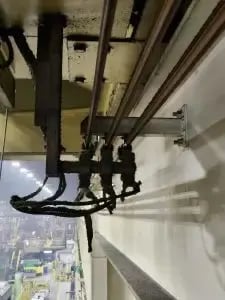
Is it necessary to install a grounding conductor on your overhead crane? Here’s how to find out !
According to the RBQ, there is a form of acquired right concerning equipment installed prior to the modification date. In fact, it specifies that “the current Code applies to work currently being carried out. It cannot be used as an overriding criterion for judging the situation regarding work done previously, since the Code of the time was the reference.” (Areas of intervention, different measures and acquired rights, RBQ website)
However, if “modification work is carried out on the portion of the installation concerned, the acquired right is transformed into a duty to comply with the code requirements in effect at the time of the work.” What does this mean? It means that any electrical modification to the existing installation will require the installation of a grounding conductor to bring the installation into compliance with current standards. This is the case when replacing or adding an overhead crane, for example, as the electrical requirements will not be the same.
Other electrical modifications may require the addition of a grounding conductor, if your overhead crane doesn’t already have one. So how do you go about your next project?

In which situations does a grounding bar become mandatory?
- When replacing or modernizing an overhead crane
- When adding a new overhead crane
- When modifying the existing conductor bar system, for example when extending it
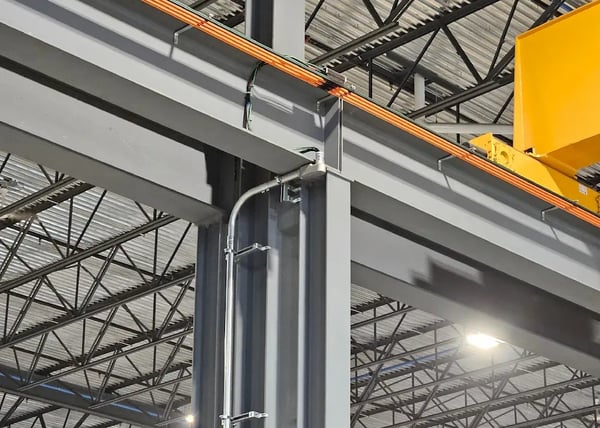
When in doubt, consult a lifting specialist who can analyze the situation in detail. Making a non-compliant modification to a lifting system could have far worse consequences. Being caught out could force you to take emergency action at a time that could further harm your productivity.
In this respect, adding a grounding conductor can be complicated, as the intervention could extend over an entire crane runway, rather than an isolated sector of your production. To limit the inconvenience, your lifting expert can advise you and work with you to determine a method to limit the impact.
Beyond the standards, why install a grounding conductor?
Modern overhead cranes incorporate far more electronics than before: variable frequency drives, PLCs, sensors, remote diagnostics, and operator-assist systems. Proper grounding helps eliminate interference and stray currents, reducing errors and stabilizing the operation of variable frequency drives. In short, it helps prevent anomalies and intermittent shutdowns, which are often difficult to diagnose.
Plan your modification to ensure compliance and reliability
Now that you understand the legal requirements and best practices related to grounding bars for overhead cranes, you can make the right decisions during your next modifications. A dedicated grounding bar is not just about compliance—it’s a key element for improving equipment reliability and reducing the risk of hard-to-diagnose downtime.
If you’re thinking of modifying your overhead crane, we recommend that you have your installation checked by an expert. Contact a Premium specialist for a personalized analysis. We provide support to industrial companies wishing to make compliant and optimized modifications to their lifting equipment. Fill in our form for a personalized assessment of your situation.