
Marc-André Martineau
Manager & Partner Premium inc
Revision date: March 9, 2026
In complex projects like overhead crane installations, some technical details can seem minor... until installation day arrives.
A misplaced garage door, ventilation duct, or other building systems can suddenly prevent the equipment from operating as designed, delay commissioning, and drive up costs.
At Premium Industrial Group, we encounter this type of coordination challenge regularly. The project is progressing, the plans are complete, the teams are competent... yet a single building system ends up blocking the overhead crane installation (see box "What building systems means in this article"). This is a challenge we are familiar with—and one that we see recurring too often, despite the best of intentions.
In this article, you will learn :
• Why these problems occur despite the plans provided and professional collaborators
• What consequences this can have on your project
• What the real underlying problem is
• The solution that will help you avoid installation issues entirely
Why do obstructions with overhead cranes occur during installation?
On paper, everything seems clear: clearances are indicated, drawings are issued, and equipment is designed accordingly by a professional team.
But in the reality of a building project, several factors increase the risk of physical conflict between the overhead crane and other equipment :
-
plans are not all created at the same time or with the same level of detail,
-
some design details may change along the way (mechanical modifications, relocated doors, equipment changes, etc.),
-
several parties work in parallel, without necessarily communicating their decisions to each other.
The result : each team validates the information relevant to their discipline, but not necessarily at the right moment or with the latest data.
But is this really so critical? Can't we just adjust later?
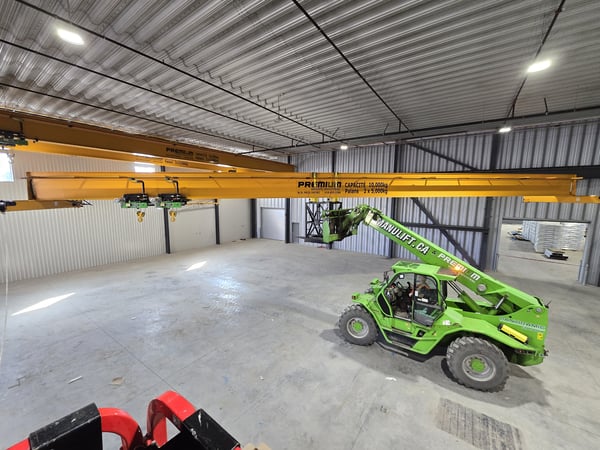
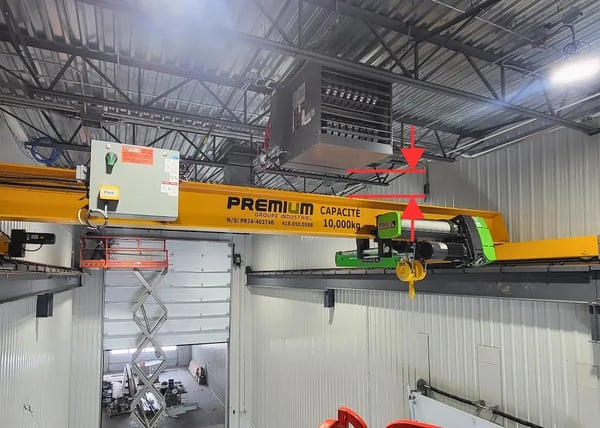
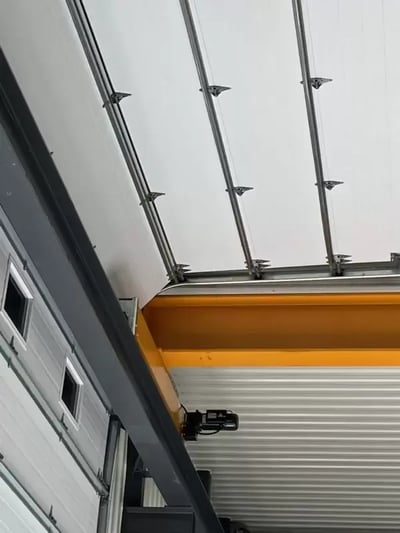
Some examples of obstructions with building systems


What are the consequences of an overhead crane obstruction during installation?
If an obstruction is discovered during installation, it’s already too late for simple adjustments. Here are the potential consequences for you:
 Unforeseen additional costs
To achieve the necessary clearance, additional costs may be required for :
- Engineering
- Modifications to the overhead crane (parts and additional labor)
- Modifications or relocation of the building system element
These costs vary depending on the situation.
Project delays and impact on your production schedule
These changes often require more time and, therefore, extra site visits. In the case of tight deadlines, this could directly impact your production schedule.
Obstructions limit the use of your overhead crane
Sometimes, the owner of the new lifting equipment accepts that the use of their overhead crane will be limited due to :
• Reduced lifting height : an obstruction prevents the overhead crane from lifting loads to the intended height
• Limited hook approach: building systems restrict the overhead crane’s ability to reach certain areas at the extremities
When the additional costs or delays involved in resolving the issue are too high, and the consequences of maintaining the status quo are acceptable, the owner sometimes decides to live with certain limitations.
Frustration and tension with business partners
All of these consequences can undermine trust with the various stakeholders. For you, this means spending more energy dealing with unexpected issues rather than focusing on your actual goals.
However, all of this can be avoided. How? Let’s start by identifying where the real problem lies.
What is the real issue behind overhead crane obstructions?
The underlying problem is the lack of centralized coordination.
In a new construction project, several teams work in parallel :
-
structure,
-
overhead crane,
-
other machinery or equipment, etc.
Each team works according to its own plans, constraints, and deadlines.
But sometimes, no one is formally responsible for validating the required clearances at the right time, using the correct, up-to-date data.
If the overhead crane clearances (or any other constraints required by one of the teams) are not known and considered by the other teams a conflict is almost inevitable.
So, what is the real solution to the real problem?
The real solution: appoint a project coordinator
There is a clear solution to this problem : appoint a person or team to coordinate all stakeholders, particularly regarding the issue of clearances.
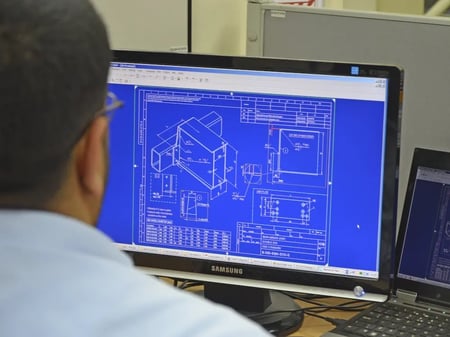 This project coordinator serves as the point of contact to ensure that :
-
the right plans are shared at the right time,
-
the necessary clearances are understood and adhered to,
-
validations are obtained before the point of no return.
This person must be trained and briefed by each specialist so they understand the critical constraints and know what actions to take at the right time.
|
Clearances required by CSA Standard B167-26 in practice CSA Standard B167-26 specifies minimum clearances of : These values represent theoretical minimums. They do not account for structural deflection (for example, under snow load), installation tolerances, or specific equipment. For this reason, manufacturers often plan for an additional 100 to 150 mm of clearance, depending on the project. It's essential for the project coordinator to share the overhead crane manufacturer's drawings with all disciplines in a timely manner.
|
.webp?width=550&height=299&name=Picture1%20(1).webp)
💡 This article can serve as an awareness tool for that person. It's intended to equip those responsible for coordinating decisions.
Proactive coordination or costly compromises
Clearance conflicts involving overhead cranes are neither rare nor insignificant.
They often result from a lack of structured coordination between competent - but isolated - teams.
By appointing a knowledgeable project coordinator for the entire process :
-
you avoid predictable errors,
-
you reduce the risk of on-site adjustments,
-
and you make sure you get the full value of your installation, without compromising performance or safety.
Next steps -
Use this article to educate the person responsible for coordination on your project.
-
Confirm the clearance requirements specific to your overhead crane with your manufacturer.
-
Read the article "Overhead crane installation: 8 problems to avoid" to prevent any other issues that could compromise your installation.
Now that you better understand the risks associated with obstructions and the importance of centralized coordination, you’re already in a better position to get the most value out of your overhead crane—safely and without compromise.
|
FAQ Do obstruction issues also occur in existing buildings? In an existing building, all systems are already in place. In these situations, the overhead crane manufacturer acts as the technical project coordinator. A site visit is usually carried out after the contract is signed, to take precise measurements and verify all actual clearances. However this verification may reveal some surprises :
The good news is that these issues are identified before the lifting equipment is manufactured, which allows the design to be adjusted ahead of installation. This prevents most major problems. That said, it's important to keep in mind that this may affect the overall project cost. |