
By Marc-André Martineau
Manager & Partner at Premium Industrial Group
In short…
When a building is not designed to accommodate an overhead crane, there is a solution : a freestanding structure. This article explains where to start in such circumstances.
Find out when a freestanding structure may be necessary, as well as its advantages and disadvantages.
Read the article to find out more!
You would like to install an overhead crane, but have been told that your building is not designed to accommodate one?
As concern sets in, you may find yourself asking: "How am I going to do this? Is it even possible? Will major modifications to the building be necessary? If so, how much will it all cost me? "
That's when this seemingly simple project turns into a mountain to climb! But is that really the case? Where do you even begin?
Rest assured, in this article, you'll learn how it's possible to install an overhead crane even if the building wasn't designed for it, thanks to the addition of overhead crane structures that are independent of your building (called freestanding structures).
You will learn the following :
- What is an overhead crane structure?
- Under what circumstances should the purchase of a freestanding structure be considered?
- The pros and cons of a freestanding structure.
- Where to start when you need a freestanding structure?
Let's start with the basics: what exactly is an overhead crane structure?
Definition: What is an overhead crane structure?
.webp?width=400&height=300&name=Design%20sans%20titre%20(8).webp) The overhead crane structure is the set of components that support the rails on which the lifting device moves.
The overhead crane structure is the set of components that support the rails on which the lifting device moves.
To illustrate, in a house, the walls and beams are the structure: without them, everything would collapse. Similarly, the overhead crane must be supported by a structure that can bear these heavy loads.
Every overhead crane installation involves a structure. However, certain circumstances will require to consider purchasing a freestanding structure. Let's take a look at them.
Under what circumstances should the purchase of a freestanding structure be considered?
There are three different scenarios involving overhead crane structures. Of these three, two will require a freestanding structure. However, only one will require further consideration. Let's take a closer look.
Overhead crane in a new building : When it comes to a new building, the structure will be handled by the contractor. This is the most common circumstance and is dealt with before the building is constructed.
Outdoor overhead crane : Secondly, when the overhead crane is installed outdoors, it’s obvious that a structure will be necessary, as the overhead crane has no support to rest on. A freestanding structure will automatically have to be installed¹.
Overhead crane in an existing building : This is the third circumstance in which the installation of a structure becomes important, in the context of this article. When the building is not designed to accommodate an overhead crane, a reasonably priced solution must be found.
But in the latter case, does the freestanding structure only have advantages?
Advantages and disadvantages of freestanding structures
The freestanding structure option will mostly be chosen in a building that is not designed for an overhead crane. However, this option does not only have advantages.
Advantages of freestanding structures : economical and customizable
When an existing building is not designed to accommodate an overhead crane, a freestanding structure is an economical choice. Why?
When designing a new building, the overhead crane is part of the overall project and its cost is absorbed into the overall purchase, taking advantage of quantity savings on both products and labor. However, in an existing building, major targeted renovations will be necessary. The project will often be dedicated solely to this modification, which will generate significant costs. The freestanding structure will therefore be a less expensive choice, as it does not involve major modifications to the building.

The freestanding structure is also a flexible option that can be custom built. For example, it can be installed in a specific part of your building, to address a particular need that doesn’t rely on the current location of the building's structures.
Disadvantages of freestanding structures: takes up more floor space
.webp?width=400&height=300&name=Ren%C3%A9%20Mat%C3%A9riaux%20Composite%20(RMC).webp)
A freestanding structure will take up more space than a conventional structure because it has its own support columns, which occupy floor space. You must then take into account the required clearances to avoid interfering with your current installations. Given these pros and cons, when is it worthwhile to install a freestanding structure? Here are some concrete examples where this type of structure has been used.
Examples of situations where a freestanding structure may be worthwhile
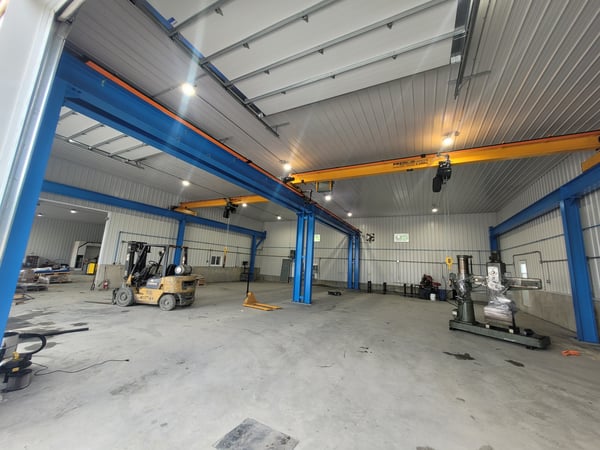
Let's take the example of Comairco. The company acquired an old building with the aim of renovating it and installing an overhead crane, as there was already one inside. However, it turned out that the existing structure was not suitable for the new overhead crane installation. Comairco therefore installed a freestanding structure suitable for the overhead crane they needed.
Sometimes there are other reasons for installing a freestanding structure, such as when the existing structure cannot support the capacity of the new overhead crane, or when the building is rented, or when the building simply cannot support the load, such as a building with a light wood frame (2x4, 2x6, 2x8, etc).
In any case, where do you start when you need a new structure?
Where to start when you need a freestanding structure?
Before you begin, there are 3 necessary checks to determine the type of freestanding structure you will need :
- The dimensions of the structure
- The location of the columns on the ground
- The thickness of the concrete slab
Structure dimensions
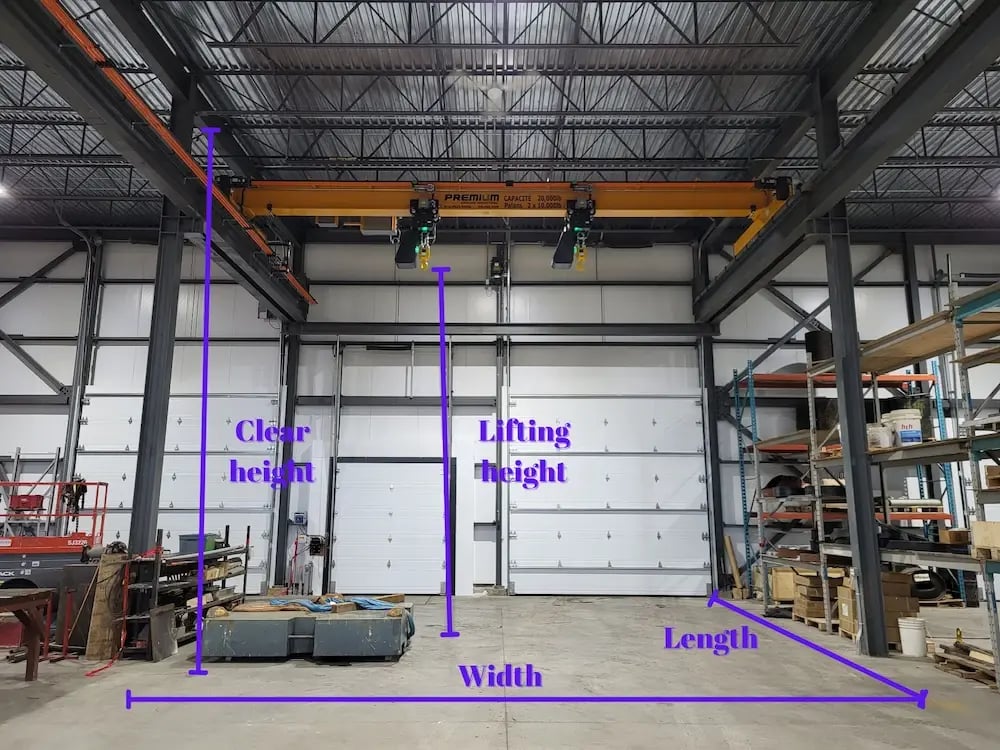
Your lifting expert will need the following dimensions to properly assess your structure :
- Clear depth of the location
- Clear width of the location
- Clear height
This information will help determine the dimensions of the structure and provide an accurate quote.
Column positioning
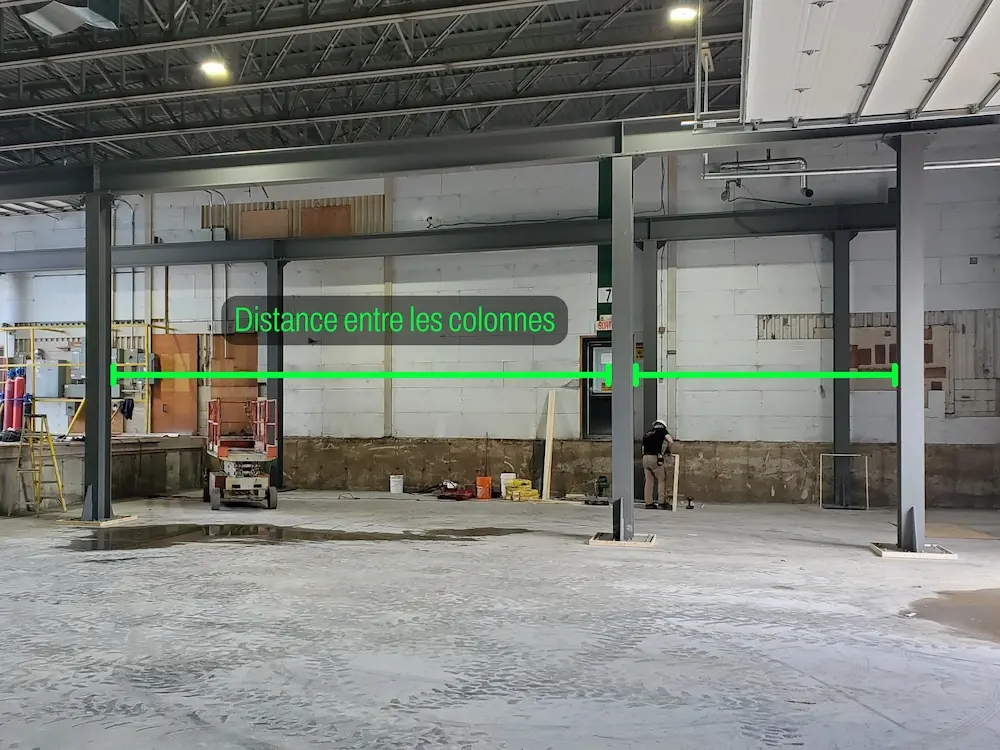
 The positioning of the columns of the freestanding structure must also be considered, and this is an important factor that will influence not only the price but also the productivity of your operations. How so?
In the future location of your freestanding structure, there may be areas that need to be kept clear, and the columns of your new structure could interfere.
Here are some examples of elements that may require an adaptation of the structure :
- Traffic lanes
- Garage doors
- Mezzanine staircase
- Machinery
- Office, room or zone
Since columns can be spaced at varying distances, your specialist will need to know which areas to keep clear in order to design the structure by placing the columns in the best location for your situation.
Concrete slab thickness
One last essential element to check is the thickness of the concrete slab where your freestanding structure will be installed. Normally, industrial concrete slabs are 6 inches thick, but this can vary for a number of reasons. Your concrete slab must be able to support the moving load of your overhead crane.
For all the details of this aspect, see the article " What is the right concrete thickness for an overhead crane structure? " There you will find everything you need to consider when discussing this with your supplier.
Summary table – Elements to consider for a freestanding overhead crane structure
| Element to consider | Description / Role | Information to provide | Suggested illustrations |
|
Structure dimensions |
To assess costs and space. |
|
 |
|
Column positioning |
Distance between columns and positioning to avoid hindering productivity | Area to be cleared:
|
 |
|
Concrete slab thickness |
Determines the floor's ability to bear the loads. | Check thickness (often 6”) | What is the right concrete thickness for an overhead crane structure? |
Gathering all this information will enable you to be prepared for the analysis with your lifting expert.
When you're ready for your freestanding structure project
Did you think that a building not designed for an overhead crane limited your options ? That doubt has now been dispelled. Thanks to the freestanding structure, you have a clear, economical, and tailor-made solution.
It can indeed be worrying to discover that your building is not designed for your overhead crane needs. But the freestanding structure eliminates this concern. With this option, you now have a clear option at your disposal.
Now, what can you do? Here are three options depending on where you are in the process :
- Exploratory stage : Feel free to learn about the different types of structures available. The " Freestanding structures " page will help you evaluate the options that best suit your needs and answer any other questions you may have (see the FAQ section).
- Budget stage : if you are in the process of evaluating your budget for the project, contact your specialist after gathering the information from the three checks mentioned above.
- Implementation stage : if you are in the implementation stage, contact your specialist to verify that you have sufficient information. If not, an expert can clarify the details with you and possibly visit the site to optimize the configuration.
The Premium Industrial Group specializes in overhead cranes and, thanks to its collaboration with its sister company Premium Industrial Structures, has developed expertise in offering various freestanding structure designs. We can therefore help you make the right choice.