
Marc-André Martineau
Manager & Partner Premium Industrial Group inc
When an overhead crane project begins, several instinctive reactions seem logical: requesting a quote, replicating a previous project, sharing technical data, and so on. Yet these reflexes can sometimes steer the project too quickly toward a quote, a specific option, or a discussion that doesn’t yet fully reflect the project’s needs.
Through our experience discussing this type of project, we've noticed that certain habits often surface early on and can influence decision quality far more than we realize.
In this article, you’ll discover 5 common reflexes that can turn into pitfalls in an overhead crane project - followed by 3 simple questions that help align your project from the very first discussions.
Let's start with the reflexes at the beginning of a project and why they can later become pitfalls.
1 – Starting an overhead crane project with a pre-selected configuration
Sometimes, even unintentionally, you may already have a specific overhead crane configuration in mind before considering all the options. You then approach the supplier with a ready-made request: equipment type, capacity, etc.
The pitfall: this initial idea can quickly drive discussions with the supplier, leading you to evaluate a single option rather than confirming whether it truly meets your needs.
Before committing to a specific configuration, check whether the project's context and objectives reveal other possibilities worth exploring.
2 – When price becomes the wrong starting point for a project
It's a classic scenario, and perfectly natural: we want to establish the project's budget.
The pitfall: when price becomes the primary benchmark too early, it risks steering the discussion with incomplete information. Or worse, it could become a misleading benchmark if the project shifts direction once the context is clarified.
Price is useful early on, but it becomes far more relevant when based on a clear understanding of the need, the context, and the objectives.
3 – Copying the previous overhead crane configuration
Using the previous project as a template may seem logical, but it doesn't necessarily reflect current operations. Technologies evolve, and industrial processes change. By automatically replicating the old project, you risk overlooking solutions better suited to today's reality.
Your new project might end up identical to the last. But keeping an open mind prevents dismissing other viable options too quickly.
4 – Starting with providing technical data for the overhead crane project
You've identified your needs. You now have the technical specifications that enable your supplier to prepare a proposal.
The issue isn't the data itself - it's essential - but the pitfall is placing too much emphasis on technical details at a stage when the goal is to clarify or guide the project.
This information is certainly valuable. But if shared before basic clarifications, it risks limiting the solution before the need is fully understood.
5 – Discussing equipment before discussing the actual use of the overhead crane
We tend to focus on technical details - wire rope or chain hoists, capacity, lifting height - thinking it's what determines the right lifting equipment.
Discussing technical details before clarifying daily use means seeing only one side of the story. Two similar projects on paper can differ greatly in practice depending on frequency of use, type of load, or operating conditions.
Actual use should guide the proposal first; technical data then refines the solution.
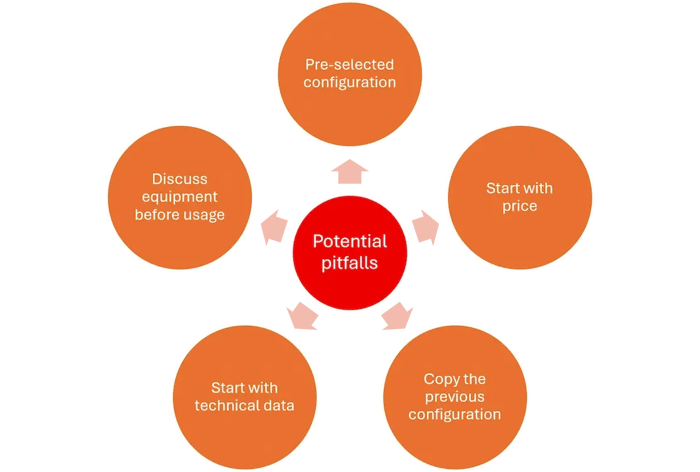
To prevent these habits from taking over, it's often enough to refocus the project on three key questions.
3 questions to start your overhead crane project right
To better guide your overhead crane, start with three questions before diving into technical details. If you'd like to start from this foundation, our article " Need an overhead: Where to start? provides the essential information you need to clarify before moving forward. But here, the goal is to show why certain natural instincts can lead you away from this starting point.
Question 1 : Why this project now?
The aim is to identify the trigger for the project. This question often provides the most context and helps distinguish between the initial need expressed and the actual problem to solve.
Fully understanding what drives the project can change its direction entirely.
Sometimes, the apparent need isn't the real problem that needs to be solved. This question helps make that distinction from the start. The answer often pushes the project in the right direction.
Question 2 - What is the goal of the project?
Is your project aimed at enhancing safety? Improving productivity? Streamlining your operations? The clearer the goal, the easier it is to evaluate options effectively.
A project focused on safety is designed differently from one focused on productivity or operational efficiency.
Defining the objective helps prevent comparing options based on the wrong criteria.
Question 3 - What will the equipment actually be used for?
Before getting into technical details, it’s important to refocus on how the equipment will be used daily. Equipment may look very similar on paper, yet the design can vary depending on frequency of use, type of load, or daily use. Understanding how the equipment will be used can help distinguish a suitable offer from one that is truly tailored to your needs.
These three questions don't complicate the project; they help better guide the process from the start. They provide the context often missing at the beginning. Choosing an option, requesting a quote, and sharing technical data - all these steps remain valuable, but they become more useful when the project is clearly understood from the start.
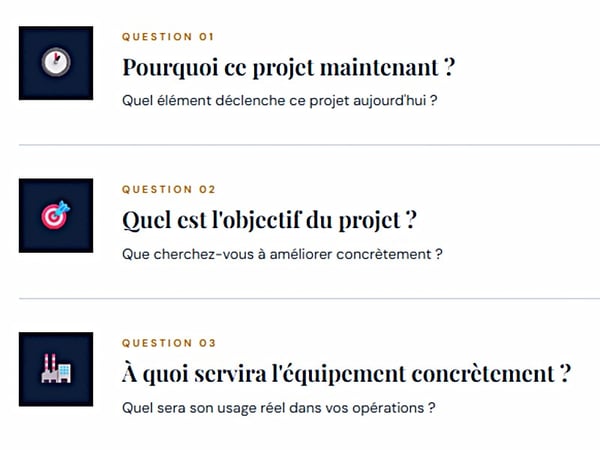
Key points to keep in mind before starting your overhead crane project
You may recognize yourself in some of these situations. That's normal. A reflex isn't bad in itself.
The key point isn't to eliminate these reactions, but to bring them up at the right time in the discussion. In other words, prices, technical data, and solution ideas retain their full value provided they come once the project is clearly understood.
Do you have a project underway and want the best possible result? No matter which supplier you choose, these three starting questions will help align the project before discussing configuration. And when the starting point is clearer, the rest of the process is more likely to align with the actual needs.
If you want to start from this foundation, our article " Need an overhead crane: Where to start? " outlines the key points to clarify before moving forward with your project.